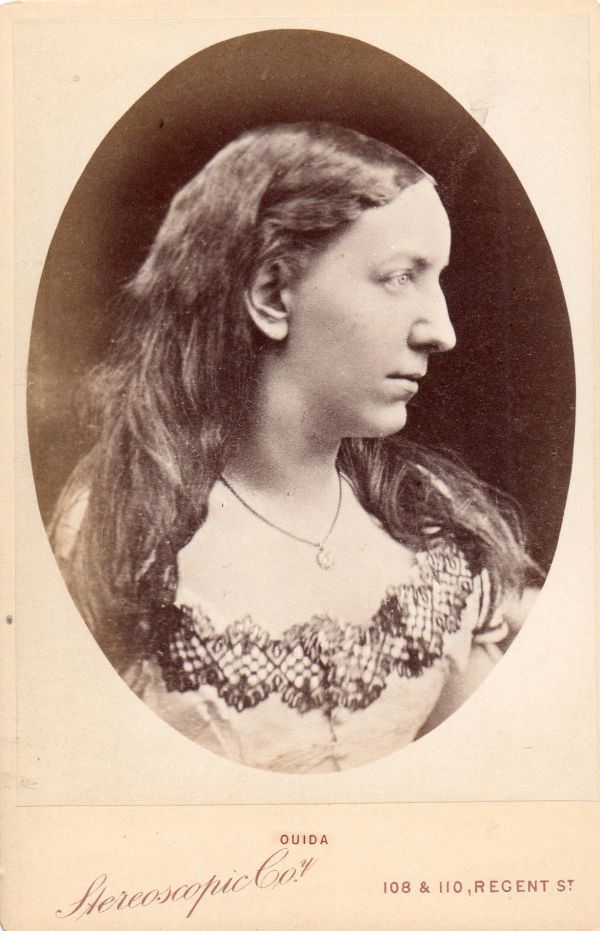
“Ouida” was the pen name of prolific Victorian novelist and essayist, Marie Louise Ramé (1839-1908), who was born in provincial Bury St Edmunds to a French father and English mother. Initially mistaken for a male writer, Ouida wrote novels about male aristocratic friendships - never, strictly speaking, 'sensation novels', but always containing sensational elements. Because of this, Ouida quickly gained a louche reputation in London society, establishing a salon at the Langham Hotel to which she invited almost exclusively male guests, many of them officers in the British army. She continued to defy convention by moving permanently to the outskirts of Florence in the early 1870s. Tuscany provided Ouida with fresh subject matter (chiefly the plight of the Italian peasantry, but also, increasingly, the commodification of the woman artist). Her remote residence also enabled Ouida to criticise aspects of British culture, notably politics, from afar. In spite of Ouida’s disparagement of fellow women writers and feminist campaigners of the period through her non-fiction, her later novels consistently focus on the legal powerlessness of married women, and the prevailing sexual double standard that underpinned matrimonial law. Ouida herself never married. She was completely self-reliant in dealing with her publishers, refusing to employ a literary agent, but as a consequence did not protect her literary estate as well as she could have done. Despite receiving a Civil List Pension and payments in advance of her final (unfinished) novel, Ouida died in poverty at her lodgings in Viareggio, her handsome tomb at the Anglo-Italian cemetery in Bagni di Lucca apparently paid for by an anonymous female admirer.
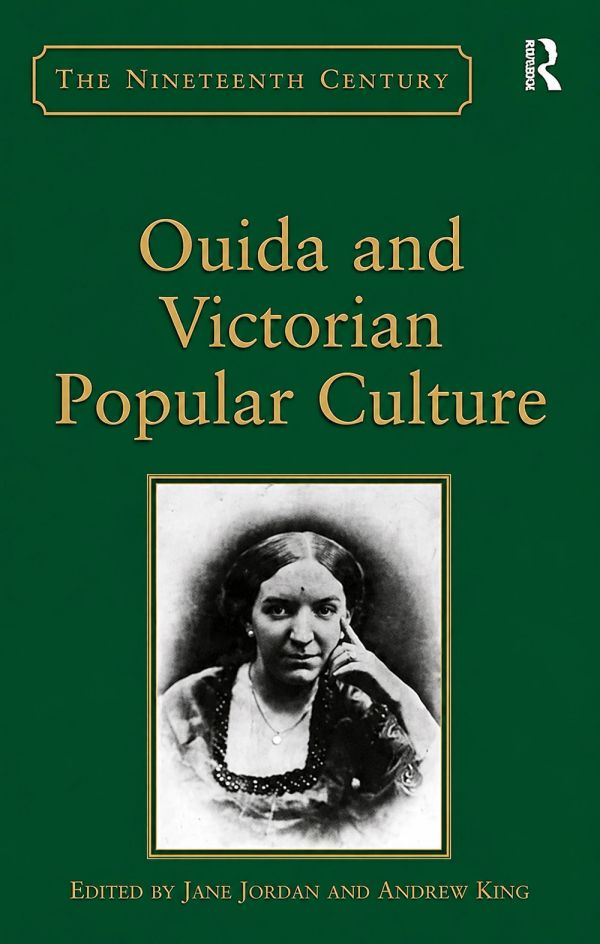
Since completing her PhD at Birbeck College in 1995, Jane has published widely on Ouida, in particular her contribution to late-Victorian debates about sexual morality and literary censorship, as well as developments in late-Victorian publishing practice. In 2008 Jane organised the Ouida Centenary Symposium at Kingston University which led to the essay collection, Ouida and Victorian Popular Culture, co-edited with Professor Andrew King (Ashgate, 2013). More immediately, in 2009, Jane and Dr Greta Depledge co-founded the Victorian Popular Fiction Association, a forum for the dissemination of new research into nineteenth- and early-twentieth-century non-canonical novelists and publishing practice -
see https://victorianpopularfiction.org
.Jane’s most recent research into transatlantic stage adaptations of Ouida’s Under Two Flags (1867) will be published Ouida in Context: Cosmopolitan Ethics & Aesthetics, edited by Dr Helena Esser & Dr Frankie Dytor (Ohio University Press, 2026).
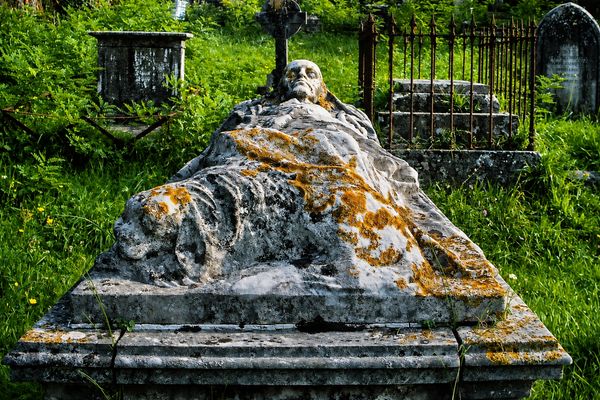
Ouida's grave in the Anglo-Italian cemetery in Bagni di Lucca (above);
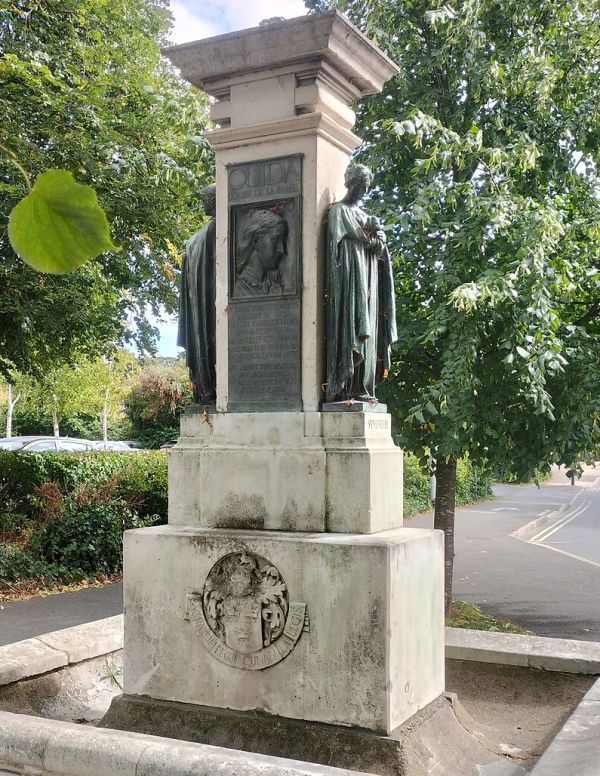
and her memorial in her birthplace, Bury St Edmunds, organised by public subscription (right).
(The celebrated juggler Paul Cinquevalli performed to raise money for the subscription, despite having buried his wife the day before - both are buried in West Norwood Cemetery).
In her lifetime ...
Ouida wrote some 39 novels and several volumes of short stories and two collections of essays .


On her death ...
the Daily Mirror published a picture of a peasant woman sitting in a field in a headscarf claiming it was Ouida.
Acknowledging their error, they accorded her a front page spread.