'The English Delilah'
Katharine O'Shea ...
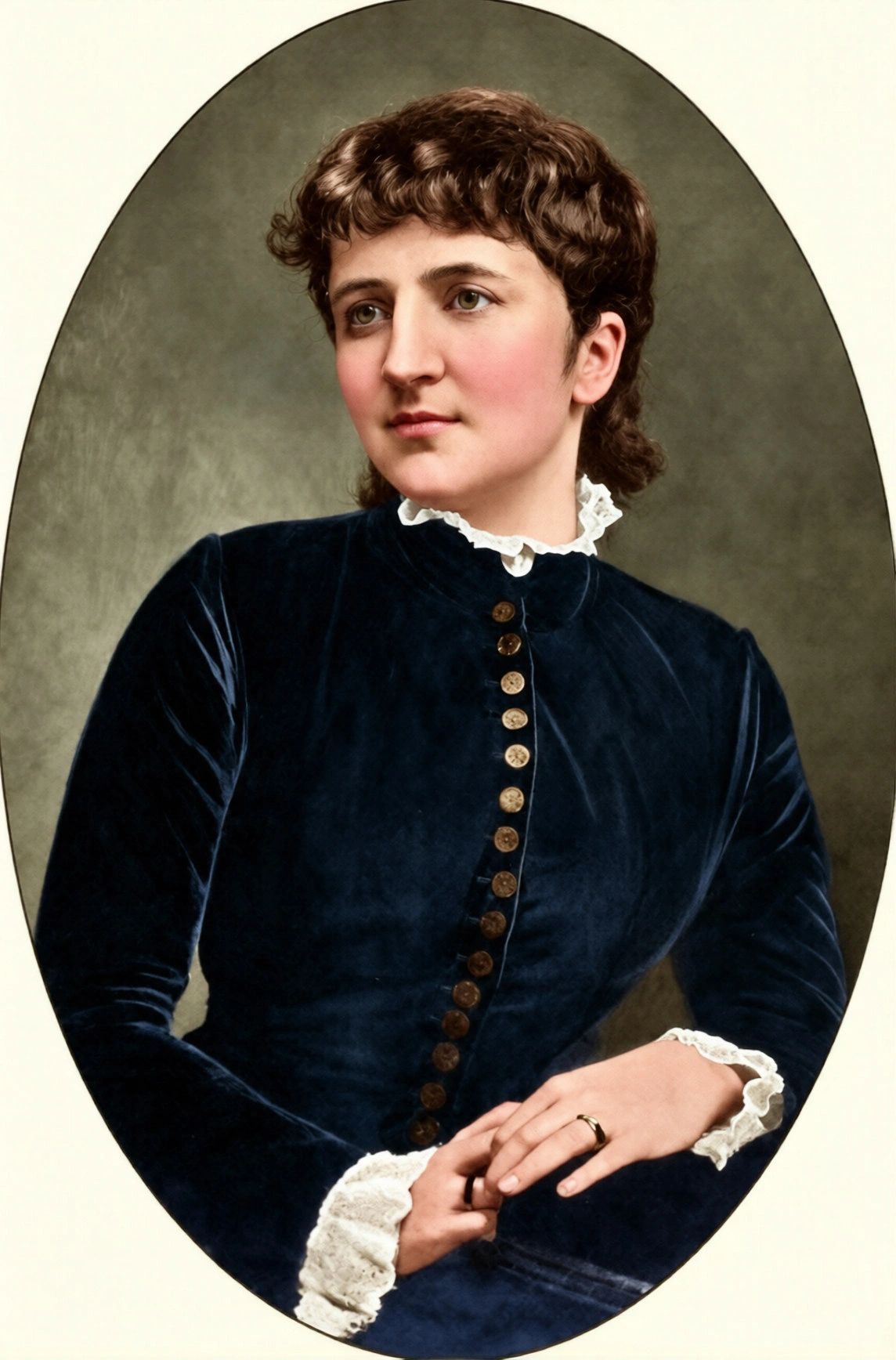
.... (Kitty was later adopted as a term of abuse, the Irish slang for a prostitute), was the mistress of the leader of the Irish Parliamentary Party, Charles Stewart Parnell, whose scandalous divorce in November 1890 effectively killed all hopes of Irish Home Rule and irrevocably changed the course of Irish history. She was the English wife of an ambitious Irish Nationalist MP, Willie O’Shea, whom she would claim colluded in her affair for his own political advancement. The divorce case itself is a fascinating example of the sexual double standard that underpinned legislation affecting married women (Katharine’s initial counter-charges of her husband’s philandering and coercion bore no weight and had to be withdrawn). Its chief significance, however, lay in the political fall-out, the Irish party split between Parnellites and anti-Parnellites furious that their leader would jeopardise Ireland’s political future (it was they who referred to her as Kitty).
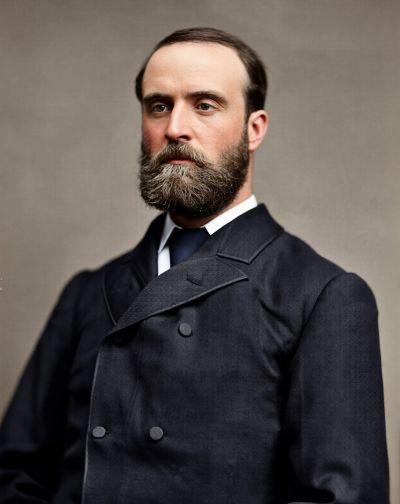
It was only revealed after Parnell’s death that Katharine had opened a secret channel of communication with the English Prime Minister, Gladstone, back in 1882 (when Parnell was had just been released from Kilmainham Jail where he had been imprisoned briefly on a charge of inciting acts of terrorism). Katharine (who herself came from a prominent Liberal family) first wrote to Gladstone offering herself as Parnell’s intermediary, making it clear that she was acting without her husband’s knowledge. From that time on she passed Gladstone letters and documents from Parnell, on occasion even meeting Gladstone at Downing Street. Gladstone would always deny that he knew of the affair. When news broke of the divorce proceedings Parnell insisted that the private life of a politician had no bearing on his fitness for public life. Gladstone was inclined to agree but ultimately had to bend to the will of his party and respond to the public outcry.
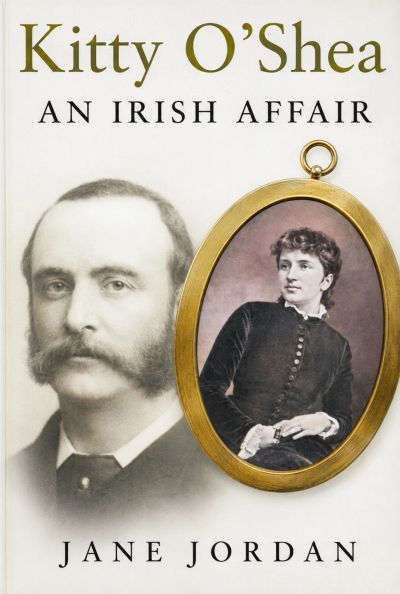
'An Irish Affair'
The accuracy of Katharine’s recollections in her 1914 memoir was doubted by Irish and English politicians at the time and has been denied by historians since. Jane’s original research on Katharine’s surviving correspondence in the Gladstone Collection at the British Library revises our understanding of her significance. Apolitical herself, she acted as a political intermediary who allowed Gladstone and Parnell to cooperate in private to an extent not possible (or desirable to either English Liberals or Irish Nationalists) on the floor of the House of Commons. This was extraordinary for a woman, who at the time had no role in national politics.
2005 Kitty O’Shea; An Irish Affair (Stroud: Sutton Publishing, 2005), 288pp. ISBN 0-7509-3342-9.
2006 ‘The English Delilah: Katharine O’Shea and Irish Politics 1882-1891’, in Politics and Power in Victorian Ireland, ed. Roger Swift and Christine Kinealy (Dublin: Four Courts Press, 2006), pp.69-83. ISBN 978-1-85182-996-5
2011 Review of The Captain and the King: William O’Shea, Parnell and Late Victorian England by Myles Dungan in Victorian Studies, 54.1 (Fall, 2011)
2012 ‘“Our Modern Code of Morals”: Public Responses to the 1890 Parnell-O’Shea Divorce Case’, in a special edition of Victorian Review on ‘Religion and Sexuality’, ed. Naomi Hetherington and Joy Dixon, 37.2 (Fall 2011) 75-87